The Confluence at Waterloo Greenway
The Confluence integrates a thriving seam of ecological activity into an intensely urban circumstance, painting a hopeful vision for 21st century urbanism by investing in the landscapes and natural functions that lie just below the surface of our cities. Connecting 4th Street and Lady Bird Lake, 13 acres of public spaces, trails, and restored habitat now occupy the most biodiverse section of the existing, where the corridor fans out to meet Lady Bird Lake, the city's preeminent natural and recreational core. The Confluence reinvents a portion of Waller Creek as part of the larger Waterloo Greenway Project, reversing 150 years of the city turning its back on the waterway. In collaboration with the Waterloo Greenway Conservancy and the City of Austin, MVVA's team is rebuilding the quiet and intricate life of this Texas creek for the enjoyment and well-being of residents and visitors alike amid downtown Austin’s booming development.
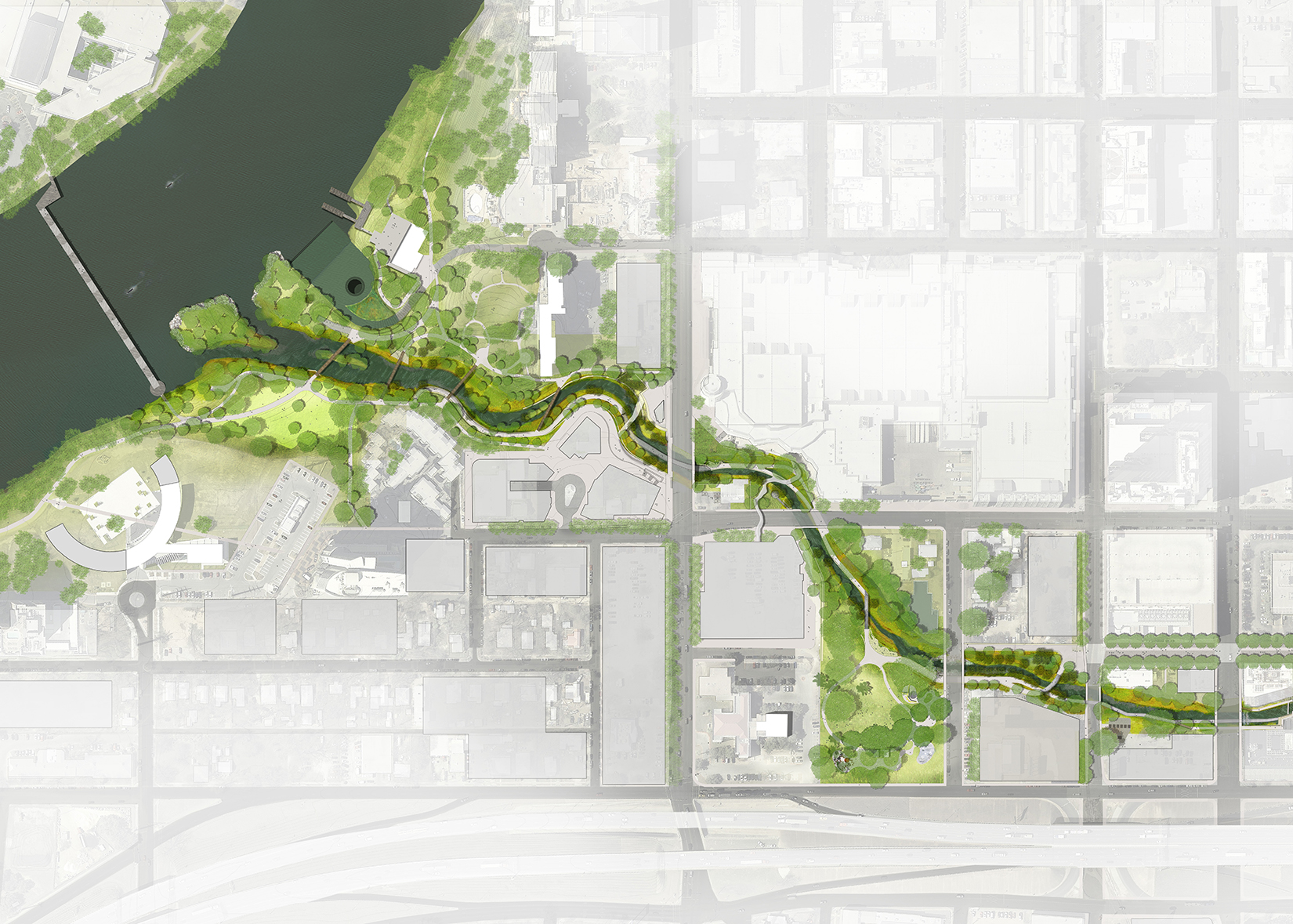
Between 2011 and 2018, the City of Austin built a mile-long bypass tunnel beneath Waller Creek to make 28 acres of downtown blocks less susceptible to flooding, enabling significant redevelopment along the creek's edge. MVVA's 2015 Waller Creek Corridor Framework Plan laid the groundwork for a 1.5-mile-long chain of parks that would build recreational and ecological value back into this infrastructure while radically expanding access to nature in the center of downtown. The success of the tunnel and Waterloo Park—the 11-acre first phase of the Greenway—prompted the U.S. Army Corps of Engineers to invest $11 million in federal funding in the Confluence, a signal of the project's growing recognition as a model for urban creek restoration at the national level. While Waterloo Park established a richly textured material language and brought civic life back to the upper creek, this project transforms the neglected southern reach of the corridor into a resilient, ecologically rich park engineered to manage daily stormwater and withstand 100-year flood events.

The design's central ambition is to make the creek—long eroded, channelized, and inaccessible—the primary experience of this part of the city. MVVA's approach to that stabilization is as distinctive as the landscape it produces. Caliche—the sedimentary mineral layer that forms just above limestone in central Texas, ordinarily a quarry waste product pried from the earth and discarded—proved to be a novel invention for renaturalizing Waller Creek's banks. Its friable, seamed surface has become an asset for ecological succession: gaps and pockets fill over time with native vegetation suited to the low-soil, high-pH conditions of the region's geology.
This emerging creek landscape is designed to supply an immersive connection with nature amid 27 million square feet of projected development that has been enabled by the flood bypass tunnel.


The creek landscape is filled with a robust native Central Texas plant palette of nearly 1,600 trees, 200,000 mature plants, and 10 acres of seed mixes that restore the riparian character of lower Waller Creek, improve downtown air quality, reduce the urban heat island effect, and create habitat corridors for wildlife. A biofiltration pond—the first of its kind in downtown Austin—treats 26.2 acres of urban stormwater runoff before it reaches Lady Bird Lake. The project is pursuing Sustainable SITES Initiative certification, recognizing its use of nature-based solutions to increase urban resilience.


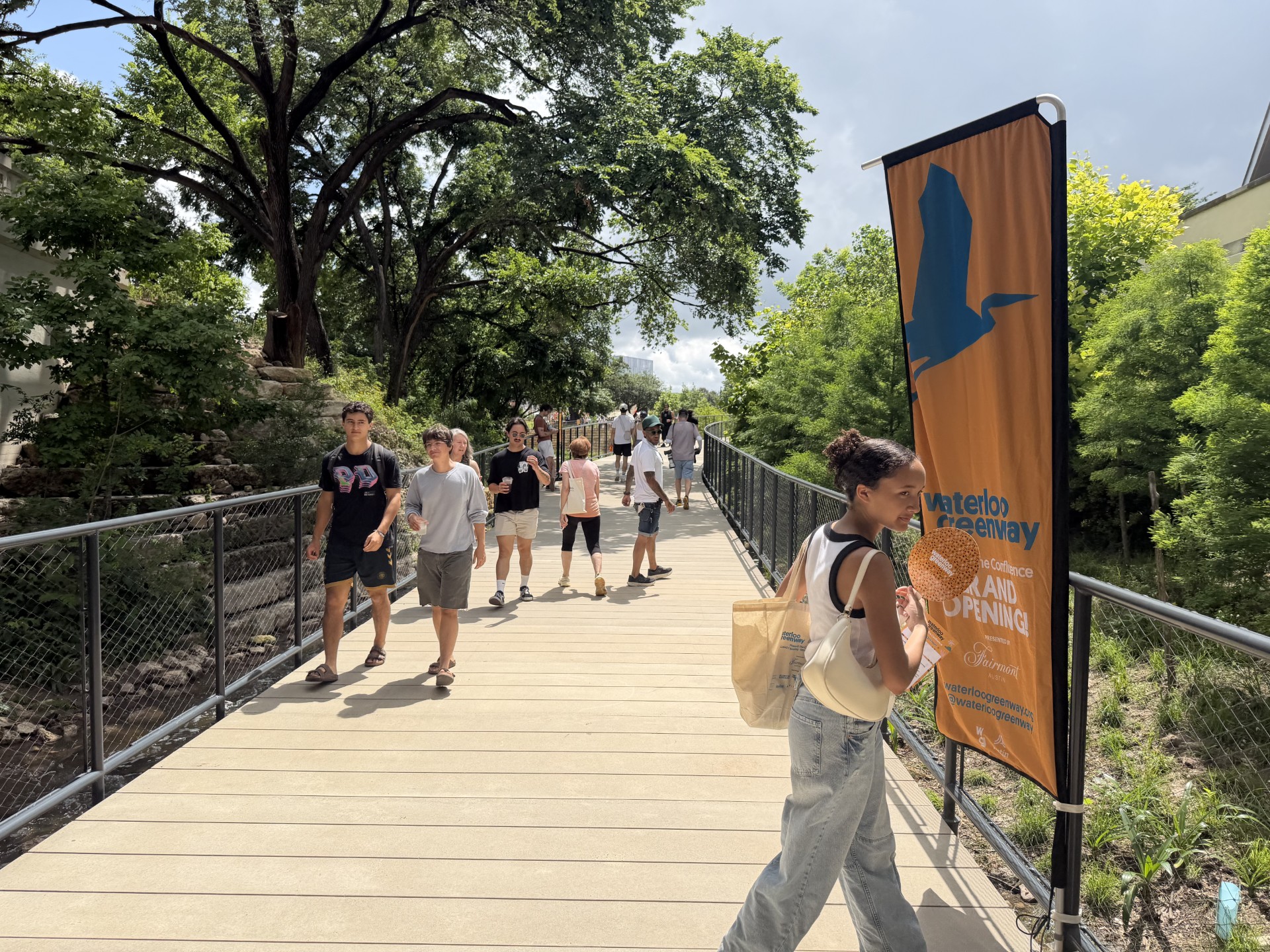
The open quality of the lattice structure frames views up and down the creek while avoiding the visual weight of a conventional bridge deck, keeping the creek landscape legible from above and the sky visible from below.

An 800-foot boardwalk embedded within the creek itself invites visitors to traverse the watercourse, bypassing busy intersections at Red River Street and Cesar Chavez Street. Three lattice bridges, each spanning the creek south of Cesar Chavez Street, provide new east-west pedestrian connections at key intervals. The Hartman Bridge, a wider replacement of the existing crossing on the Ann and Roy Butler Hike-and-Bike Trail with a new alignment, immerses trail users in the natural environment of the creek. Together, these crossings weave the trail network into the surrounding urban fabric of Palm Park, the Rainey Street Historic District, and the Emma S. Barrientos Mexican American Cultural Center, making the creek a cross-neighborhood connection rather than a barrier.
Gathering spaces—including the Lakeview Terrace, Explorers Garden, and the Leaf Deck adjacent to Lady Bird Lake, and the Cypress Grove and Trailhead Plaza at 4th Street—offer programmatic counterpoints to the creek's more immersive passages, providing shade, gathering, and visual connection to the water at the scale of everyday neighborhood use.
The Confluence opens to the public on June 6, 2026, representing a $91.5 million public-private investment. With nearly $80 million in philanthropic support raised to date, the project advances toward completion of the full 1.5-mile Greenway—35 acres of connected green space through the heart of downtown Austin—with Phase III, from 4th Street to 12th Street, currently in design.


